



Overview
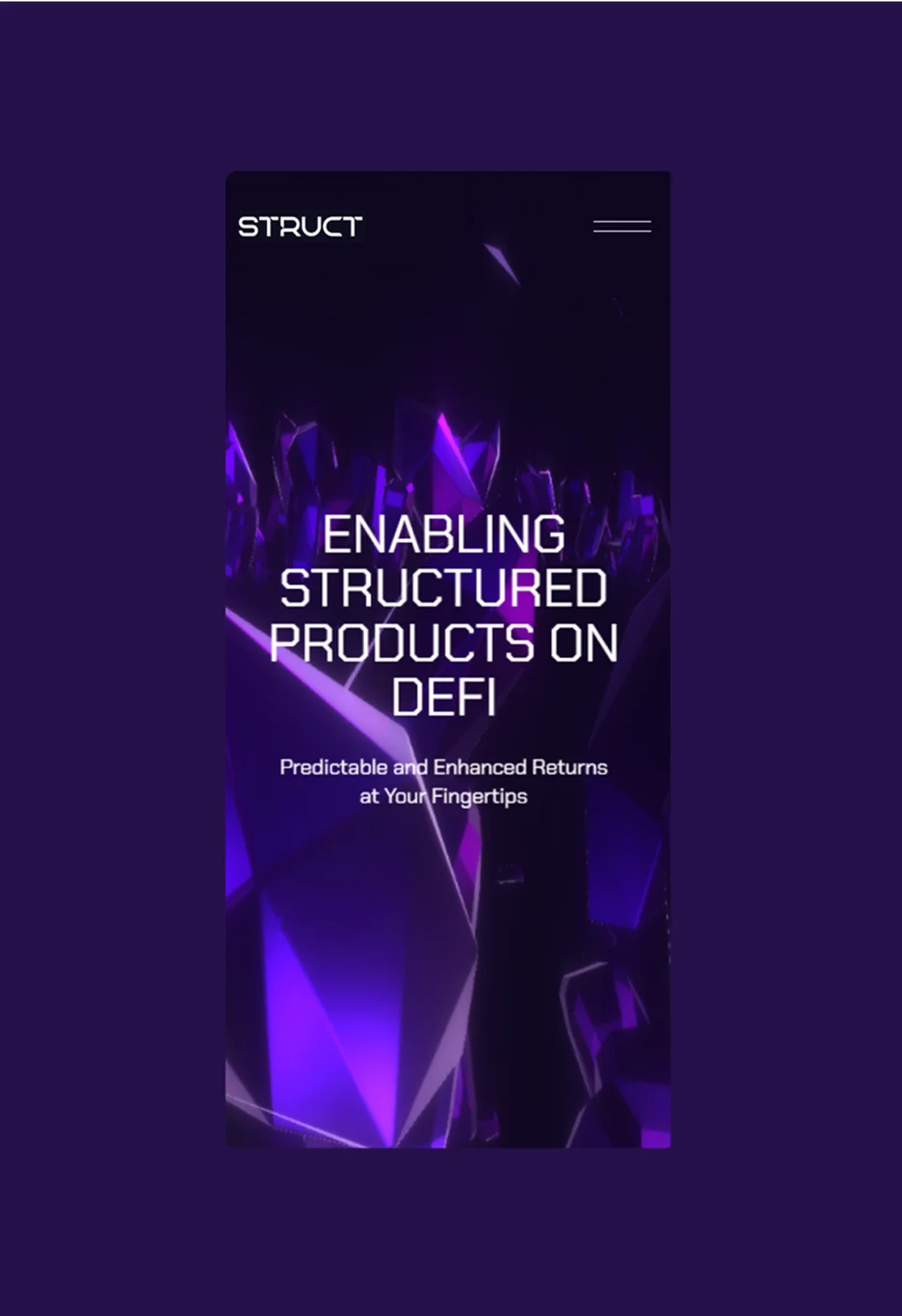
Struct Finance is the first DeFi protocol on Avalanche to bring tranched structured products on-chain - customizable fixed/variable yield vaults built on top of yield-bearing assets. I joined as founding designer and owned the brand, dashboard, factory flow, vault surfaces, marketing site, and design system through V1 launch (June 2023), the +129% TVL week that made Struct the fastest-growing DeFi protocol on Avalanche, and the auto-pools era that followed.
Founding designer, working directly with the two founders and a small protocol engineering team. Stayed as the company grew through the $3.9M seed and V1 launch.

Context
Tranching is a 100-year-old idea in traditional finance - split a yield-bearing asset into a fixed-yield slice (lower risk) and a variable-yield slice (higher risk, leveraged on top). Almost no DeFi UI had rendered it cleanly before Struct. The mental model is alien to most DeFi users, who are used to APR numbers and not risk slices. Struct's job was to make tranching feel as obvious as a swap. My job was to design that surface from blank canvas - brand, factory, dashboard, vault - and make sure it survived institutional-grade scrutiny without losing retail accessibility.
Tranching is a TradFi idea most DeFi users have no mental model for - the UI has to teach without lecturing.
Fixed and variable tranches share the same vault but have very different risk profiles - conflating them in the UI is dangerous.
The Factory (permissionless product creation) introduces a power-user surface that beginners can't crash into.
Avalanche DeFi at the time was crowded - the brand had to feel serious enough for institutional partners and approachable enough for retail.
No design files, no system, no shipping bar - founding-stage from day one.
Approach
5 decisions that shaped it
Fixed and variable tranches as distinct mental models
The same underlying vault produces two opposite user experiences. The UI treats them as two products with their own surfaces, copy, and risk explanation - not as two columns in a table.
Front-loaded risk
Every tranche choice surfaces what you're trading off (locked yield vs. leveraged exposure) inline at the moment of decision, not in a separate disclosures tab.
Factory as a power-user surface, not a default
Permissionless product creation is powerful but dangerous as a default. Factory lives behind a deliberate entry point so beginners can deposit without ever opening the creator flow.
Institutional-but-approachable brand
Struct needed to look serious enough for Blizzard Fund / FBG Capital and approachable enough for retail LPs. Solved through type and density, not through a clinical visual language.
Token-driven design system
Set tokens, primitives, and density rules that auto-pools (Jan 2024) and the Struct token launch shipped on top of - no chassis redesign required.
What shipped
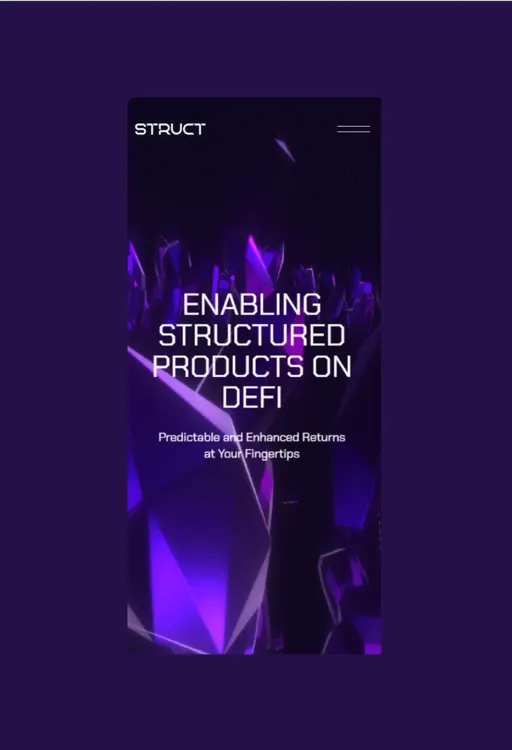
Brand and visual language
A brand that holds for institutional partners (Blizzard Fund, FBG, Bixin) and retail LPs at the same time - serious type, considered density, no clinical chrome.
Dashboard
User positions across fixed and variable tranches, with risk and yield context inline.
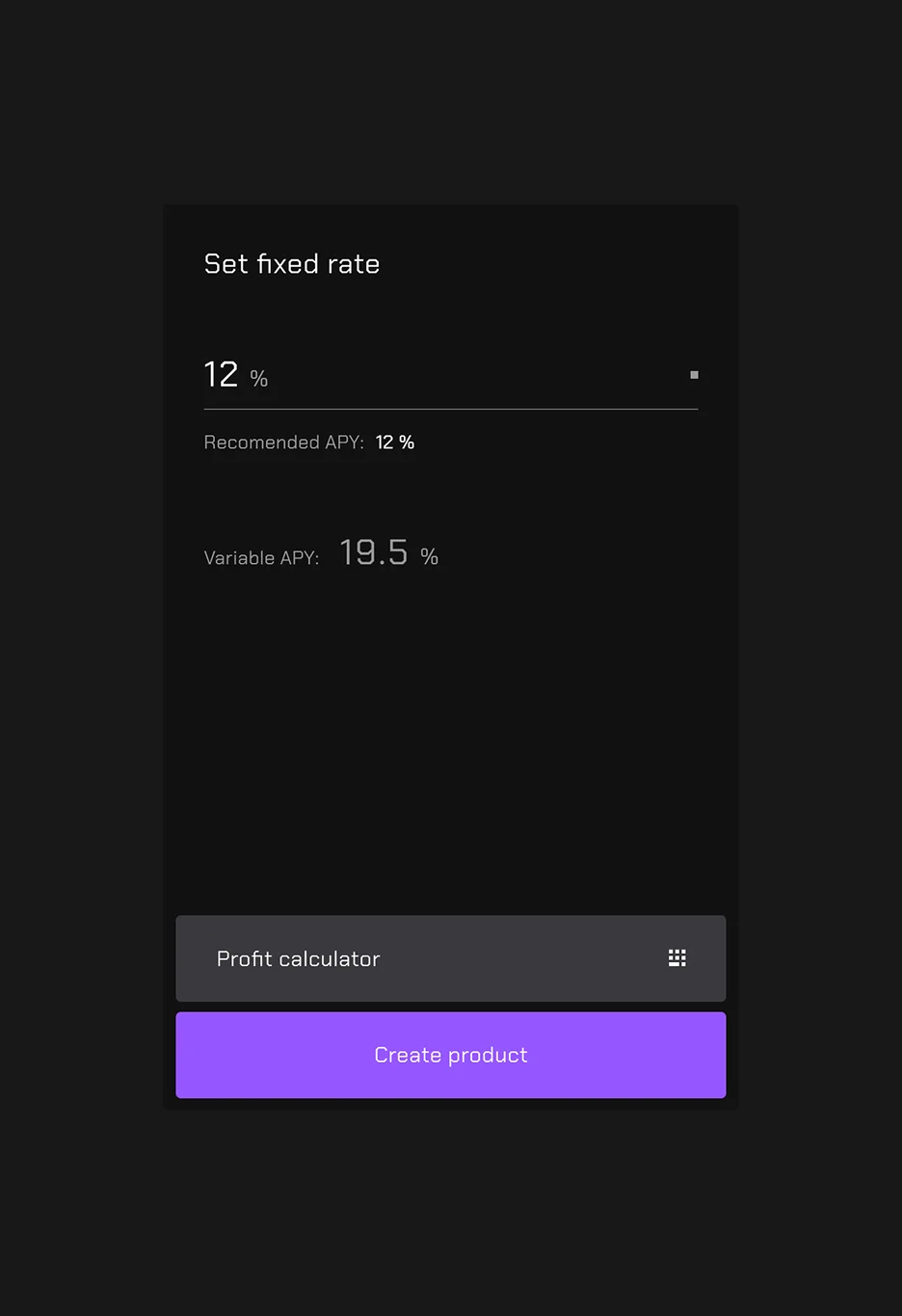
Factory flow
Permissionless structured-product creation, designed as a power-user surface that beginners cannot fall into by accident.
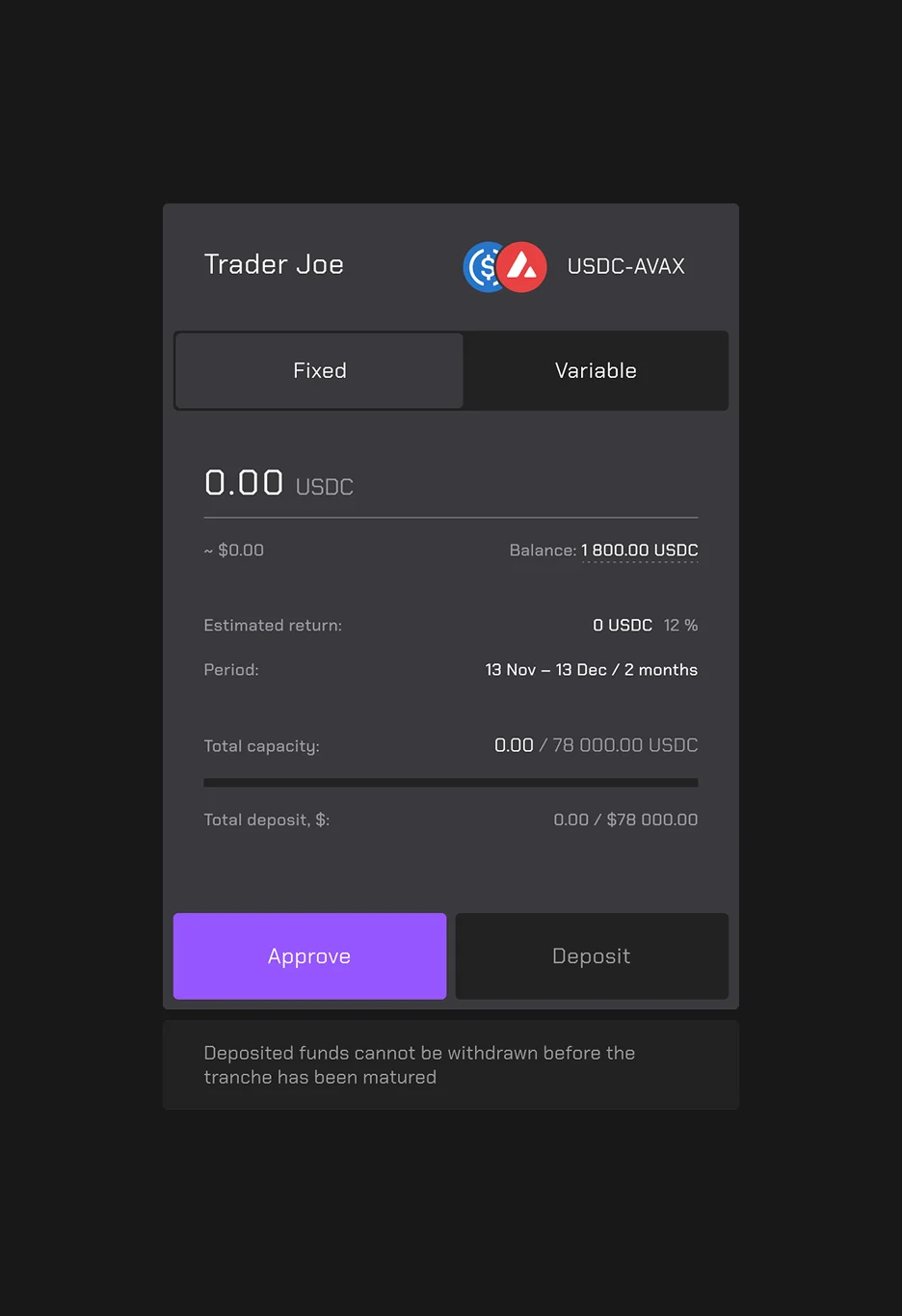
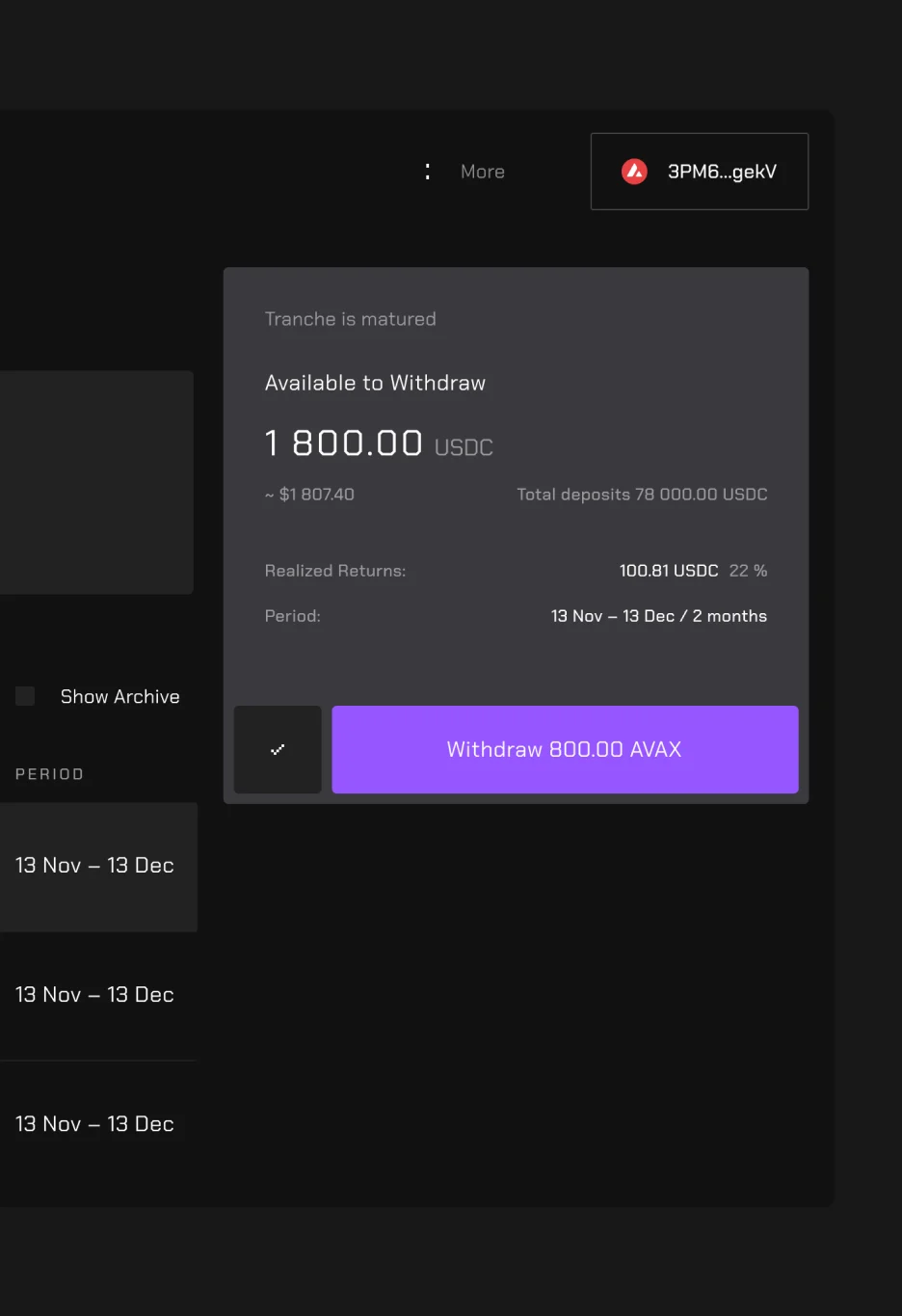
Vault interaction
Deposit, withdraw, and manage tranche positions - with the fixed/variable split treated as two mental models, not two columns.
Design system
Tokens, primitives, and layouts for data-dense DeFi - the chassis auto-pools and the token launch built on.
Outcomes
“Andriy impressed us with his approach, thinking, wireframes, and final designs. His professionalism, speed, communication, and quality consistently stood out.”
Esrin · Co-founder, Struct.fi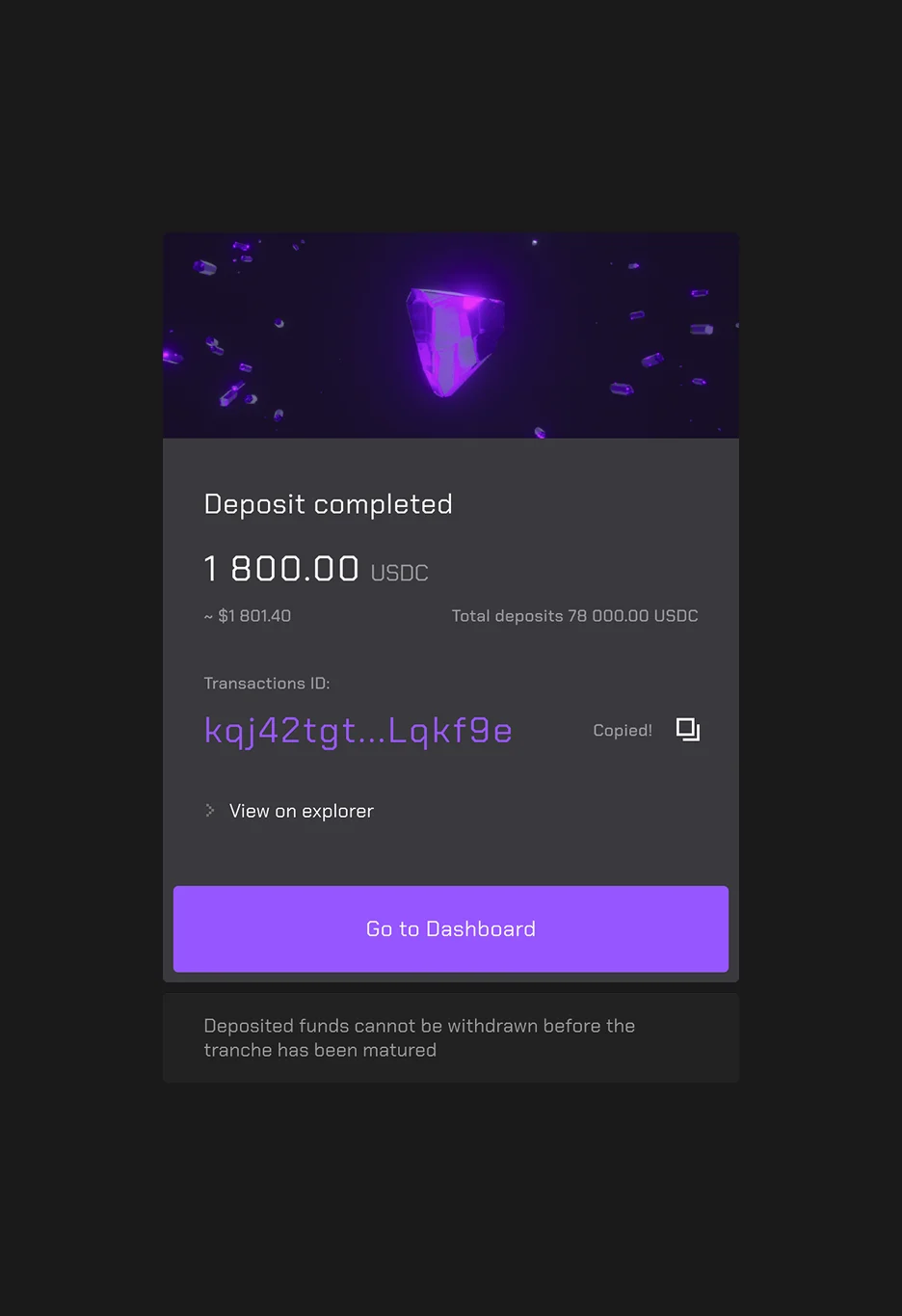
Takeaway
When you're the first to render a primitive in DeFi, the UI carries the explanation. Splitting fixed and variable tranches into distinct mental models was the call that let users actually deposit - not a column choice, a product choice.