




Overview
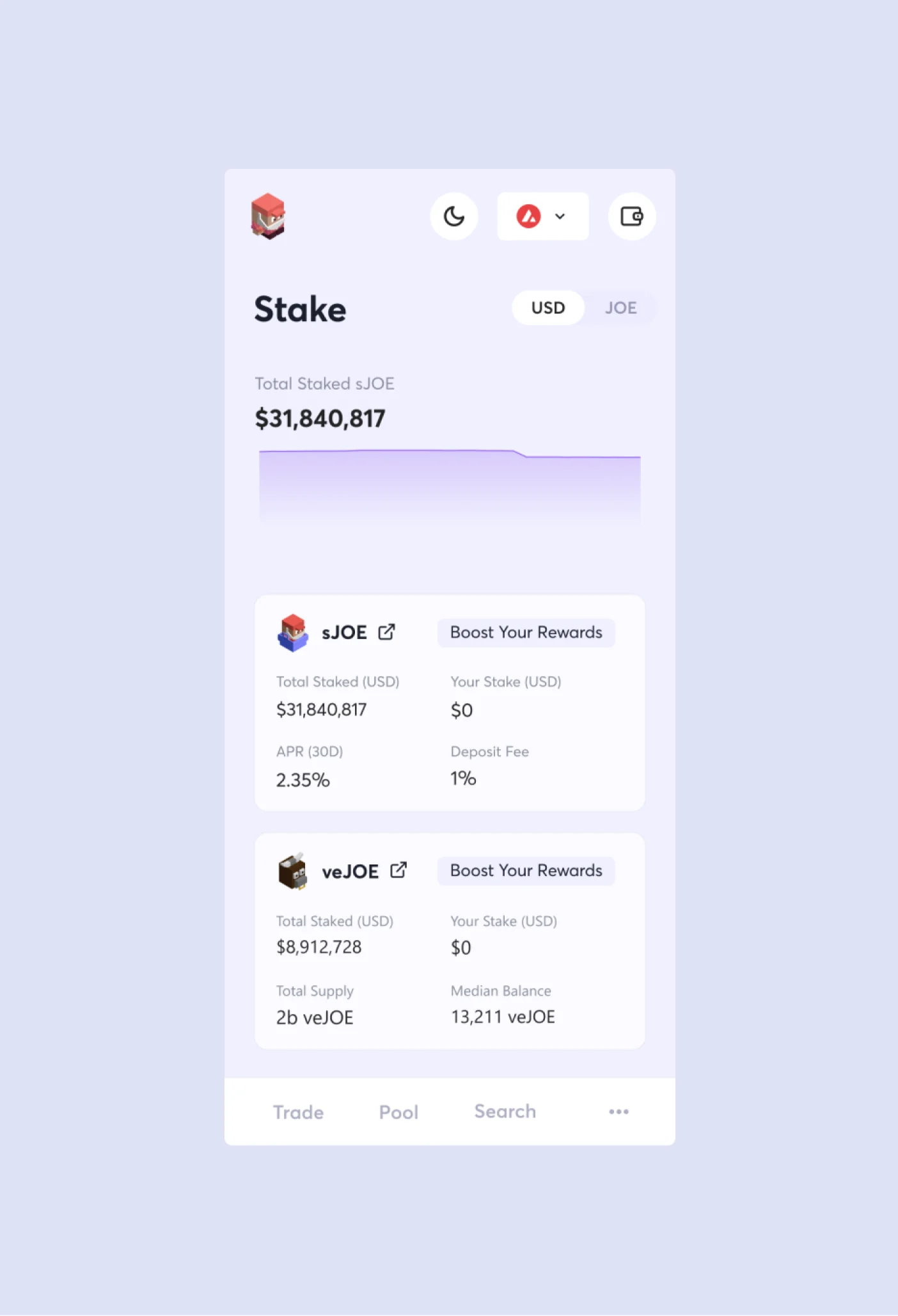
I joined TraderJoe pre-V1 as the solo designer and stayed as design lead through every major chapter - V1 launch, Avalanche Rush, Banker Joe (lending), V2 / Liquidity Book, Joepegs, Joe Studios, and mobile. The product became the largest native DEX on Avalanche - peak TVL ~$4B, cumulative volume >$184B.
Joined as the only designer, working directly with the two founders and a small engineering team. Stayed as design lead as the team grew to 30+ people across product, engineering, growth, and brand.
Context
In mid-2021, Avalanche had no native DEX of scale. Liquidity sat in forks of Ethereum protocols, and Avalanche Rush - the $180M incentive program - was about to start. I joined the founders before V1 existed: no design files, no tokens, no system. Over the next three years the product grew into a multi-product DeFi platform, and the design layer had to grow with it.
Pre-V1: nothing existed - no IA, no system, no shipping bar.
Post-launch growth: every new product (lending, NFTs) threatened to fragment the surface.
V2 / Liquidity Book introduced mechanics no DEX UI had ever rendered before.
Mobile users had no first-class experience.
Three years of feature shipping accumulated UI debt that the LFJ era had to clean up.
Approach
7 decisions that shaped it
V1 - defining what a Joe surface looks like (mid–late 2021)
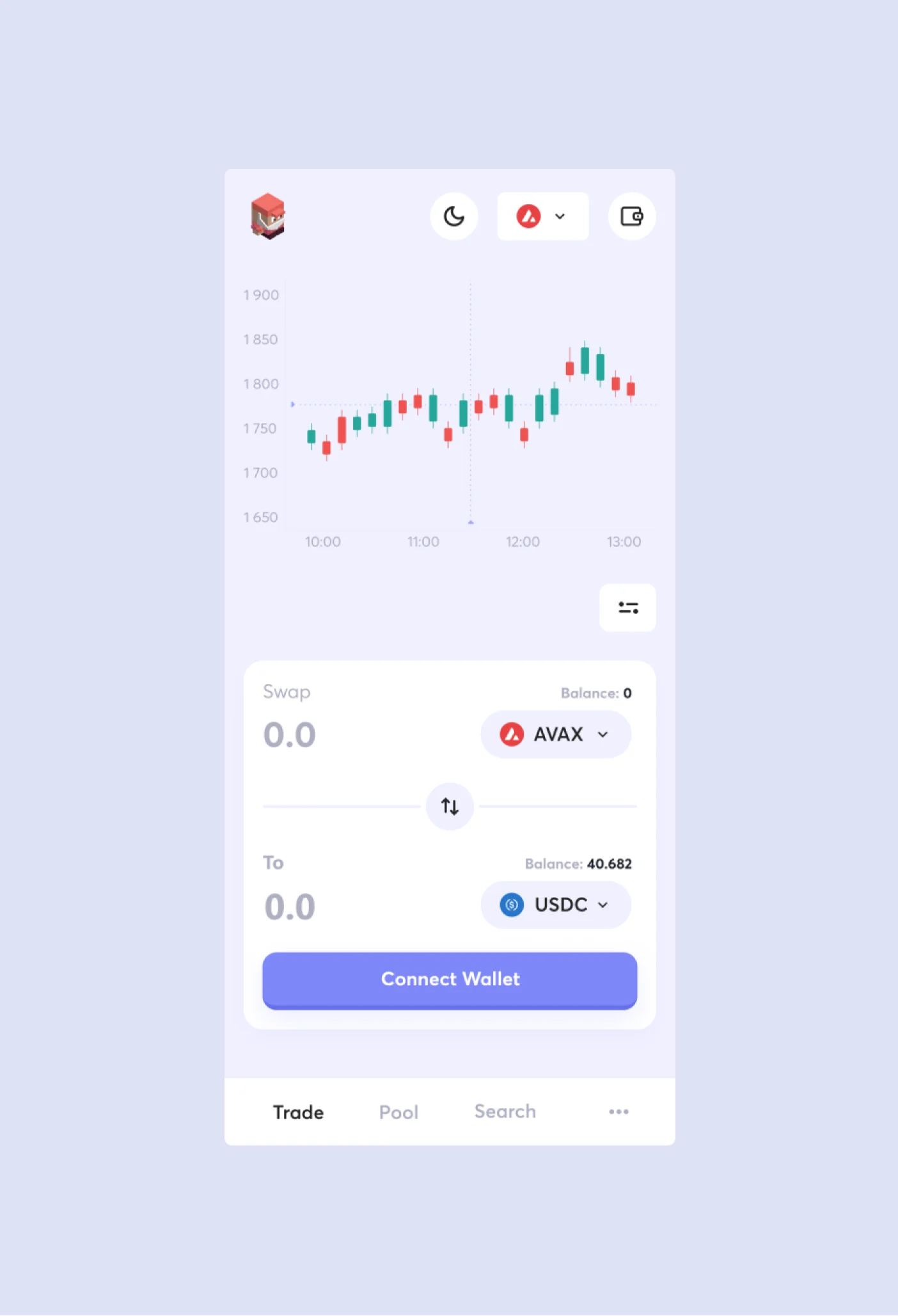
Designed swap, zap, pool, and farm from a blank canvas. Set the IA, typographic system, and personality that carried through every later product. V1 launched into Avalanche Rush; within ~3 months TraderJoe was the #1 DEX on Avalanche by TVL and volume.
Avalanche Rush era - scale (Q4 2021 – Q1 2022)
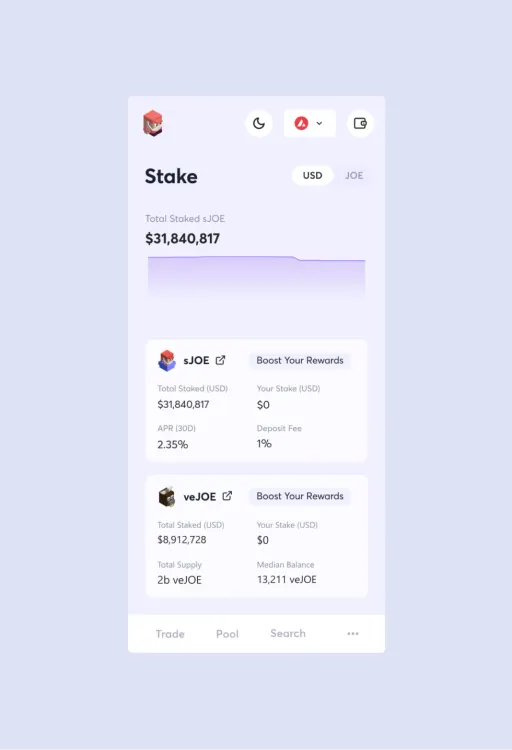
TVL crossed $4B at peak. Designed for sudden scale: order-of-magnitude more LPs, more farms, more positions to render. Tightened density, introduced filtering and sorting on Pool/Farm before tables collapsed under their own weight.
Banker Joe - lending and borrowing
Designed Banker Joe (lending/borrowing) as a first-class product, not a tab. Defined how supply/borrow rates, collateral, and health factor render for users who had never used Aave.
V2 / Liquidity Book
Liquidity Book introduced a binned-liquidity model no UI had ever rendered. Designed the LP creation flow around bin selection, range strategies, and active-bin visualization - the visual language other Liquidity Book forks copied.
Joepegs - NFT marketplace
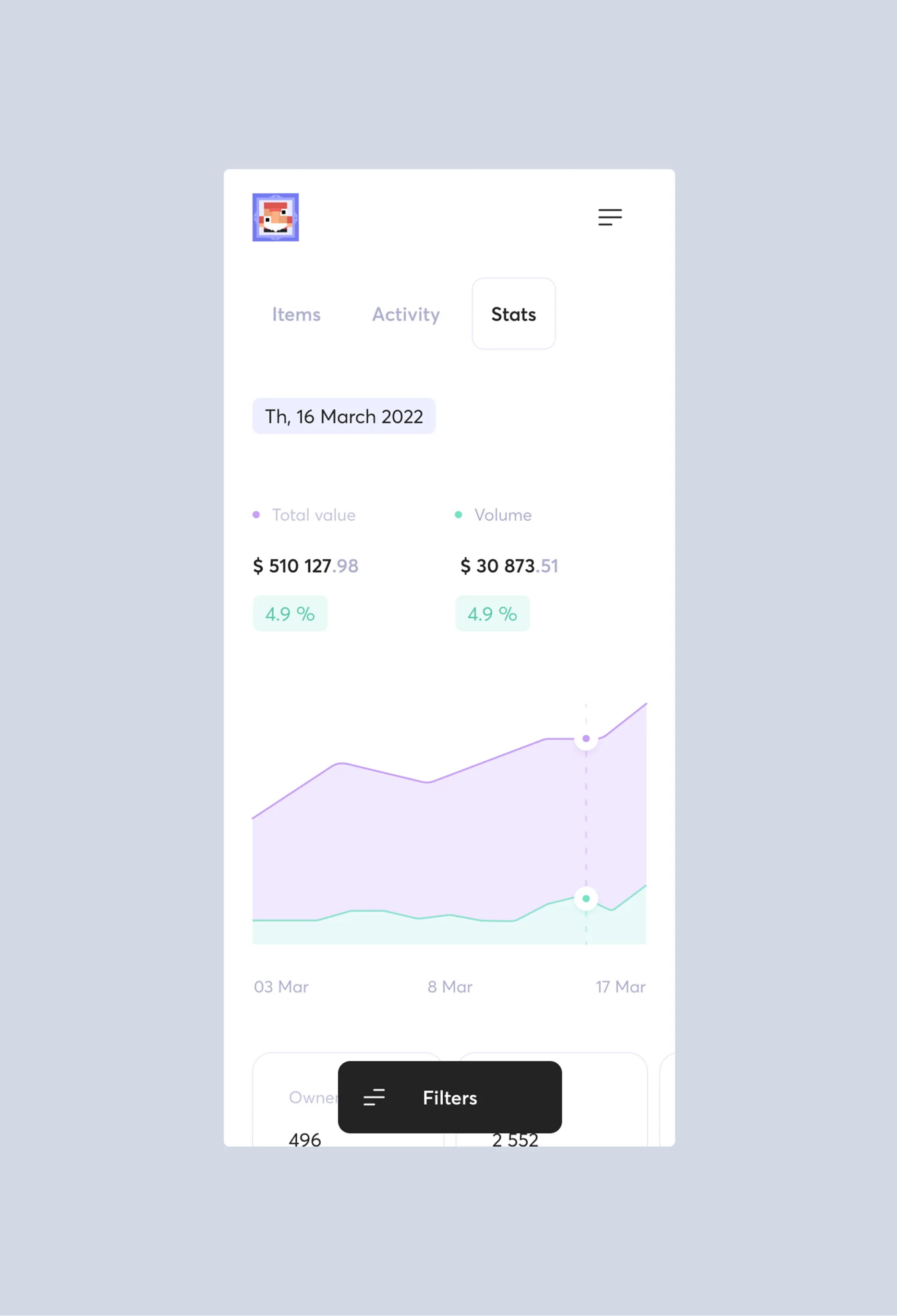
Designed Joepegs from scratch as a sister product. Browse, list, sweep, royalties, collection pages - built on the same design tokens as the DEX so the two products felt like one platform.
Mobile
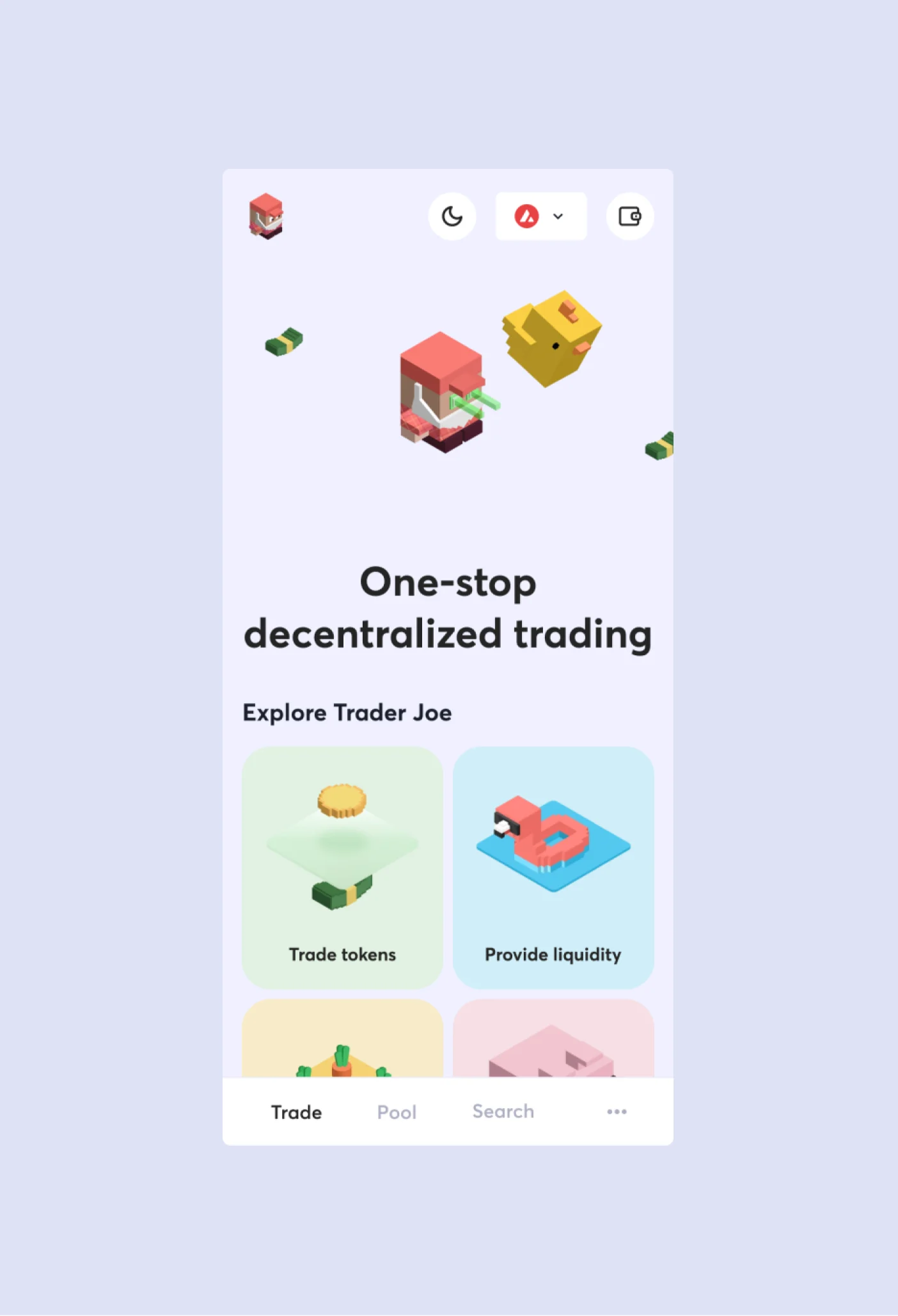
Built a mobile-first experience for swap, pool, and dashboard. Made TraderJoe usable on phone-first markets without compromising the LP power-user surface on desktop.
LFJ era - the system held
By the time LFJ shipped, the design system was three years old and battle-tested. The rebrand was driven by another lead and shipped as a theme switch on top of the tokens, components, and IA I had built - no screen-level redesign required.
What shipped
Information architecture
Built IA around user intents (swap, provide, earn, monitor), not feature names - and held the line as the product grew from 1 → 6+ products under one navigation.
Core DEX flows
Trade, Pool, and Farm rebuilt from the ground up. Slippage, price impact, and routing surfaced inline. LPs default to Liquidity Book; v1 pools live behind a clearly labelled escape hatch.
Multi-product surfaces
Banker Joe (lending), Joepegs (NFT marketplace), and Joe Studios surfaces shipped on the same tokens, primitives, and density rules as the DEX.
Design system and brand layer
Tokens, components, and motion live in one layer. The LFJ rebrand shipped without redesigning a single screen.
Outcomes
Takeaway
Founding-designer work on a fast-growing protocol is not about polishing screens - it is about building a system that holds while the company ships 6 products in 3 years and rebrands twice. The work that mattered most was the layer underneath: tokens, IA, and shipping bar.