
Overview
reNFT is an NFT rental protocol - collateralized and collateral-free rentals, designed for GameFi guilds, metaverse worlds, and any product where someone benefits from temporarily holding an NFT. I joined as founding product designer in late 2021 and stayed through V1 growth and the $5M seed round, owning the dual-sided rental UX, brand, marketing site, and design system.
Worked directly with the founders, engineering, and partnerships team. Founding product designer; the team grew across my tenure.
Context
Renting an NFT is a strange product to design for: every user is both a lender and a renter, sometimes within the same session, and the flow has to make collateral, terms, and time-bound ownership feel safe enough to act on. reNFT was the protocol behind that entire category - quietly building rental infrastructure that GameFi guilds, metaverse worlds, and NFT projects integrated with directly. When I joined, the protocol had launched but the design layer had to grow up to match the seriousness of the partners signing on.
Every user wears two hats - lender and renter - and the IA collapsed the two roles together.
Collateral, terms, and time-bound ownership were technically clear but emotionally unclear - users hesitated.
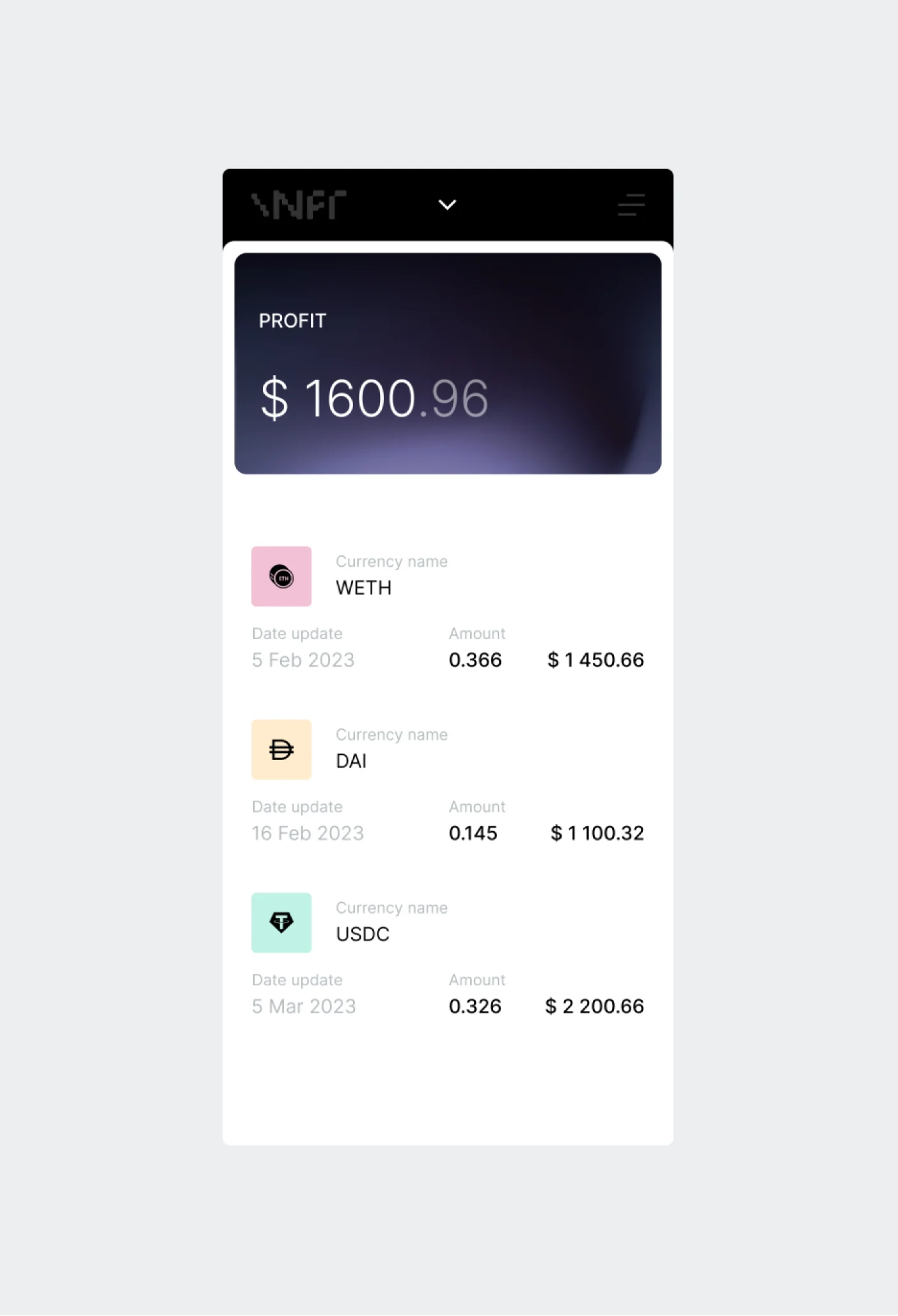
Rental status (active, expired, returned, disputed) was hard to track across sessions.
Partner-facing surfaces and end-user surfaces shared no design language.
No reusable system - every new flow re-invented the same primitives.
Approach
5 decisions that shaped it
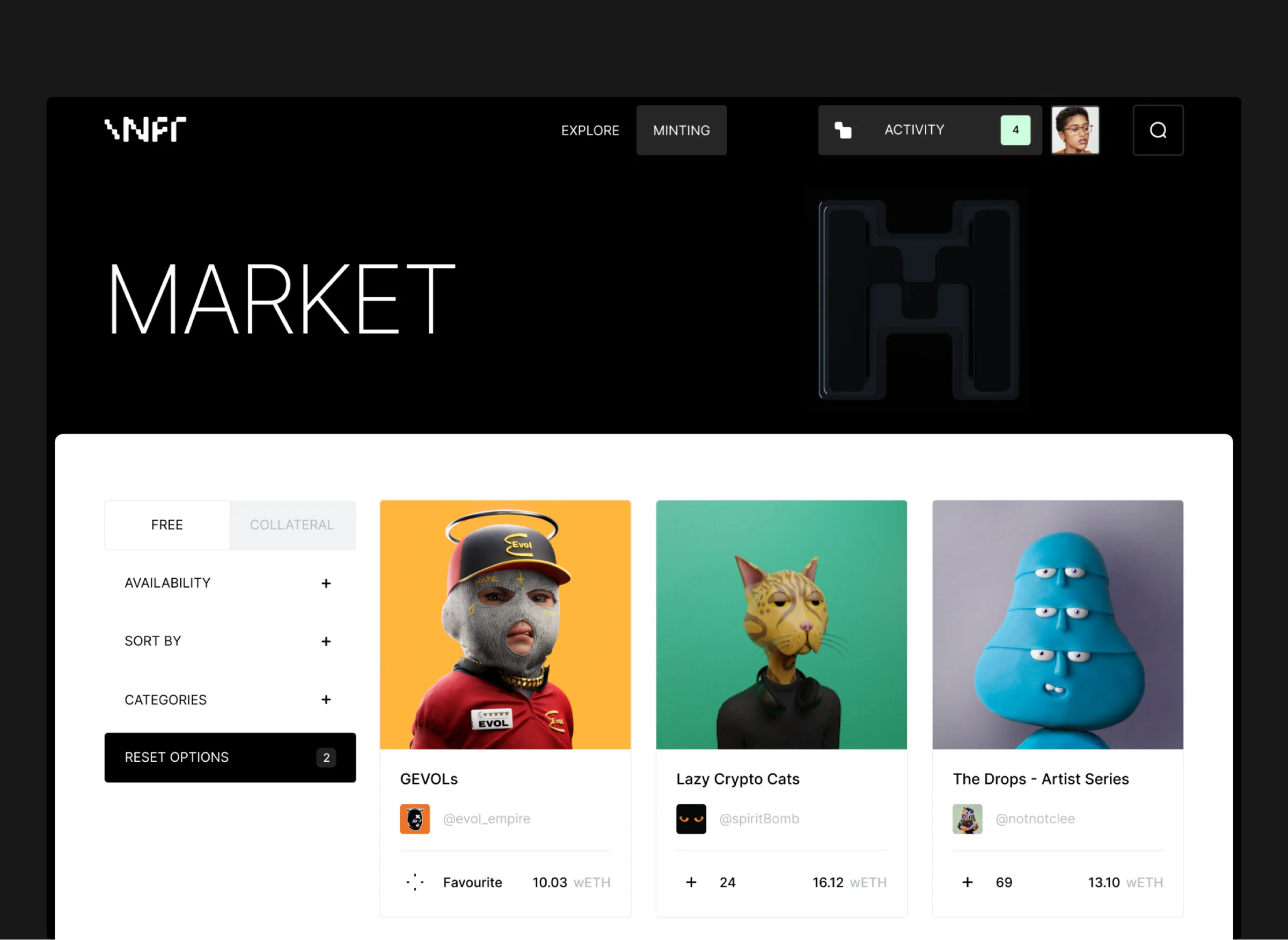
Split lender and renter into distinct mental models
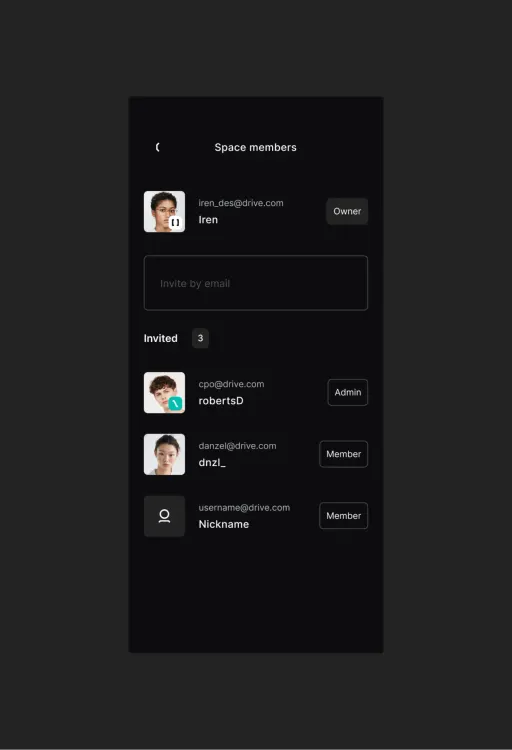
Even though the same wallet does both, the UI treats them as two roles with separate entry points and dashboards. Users stop second-guessing which role they're in.
Front-loaded the things people fear
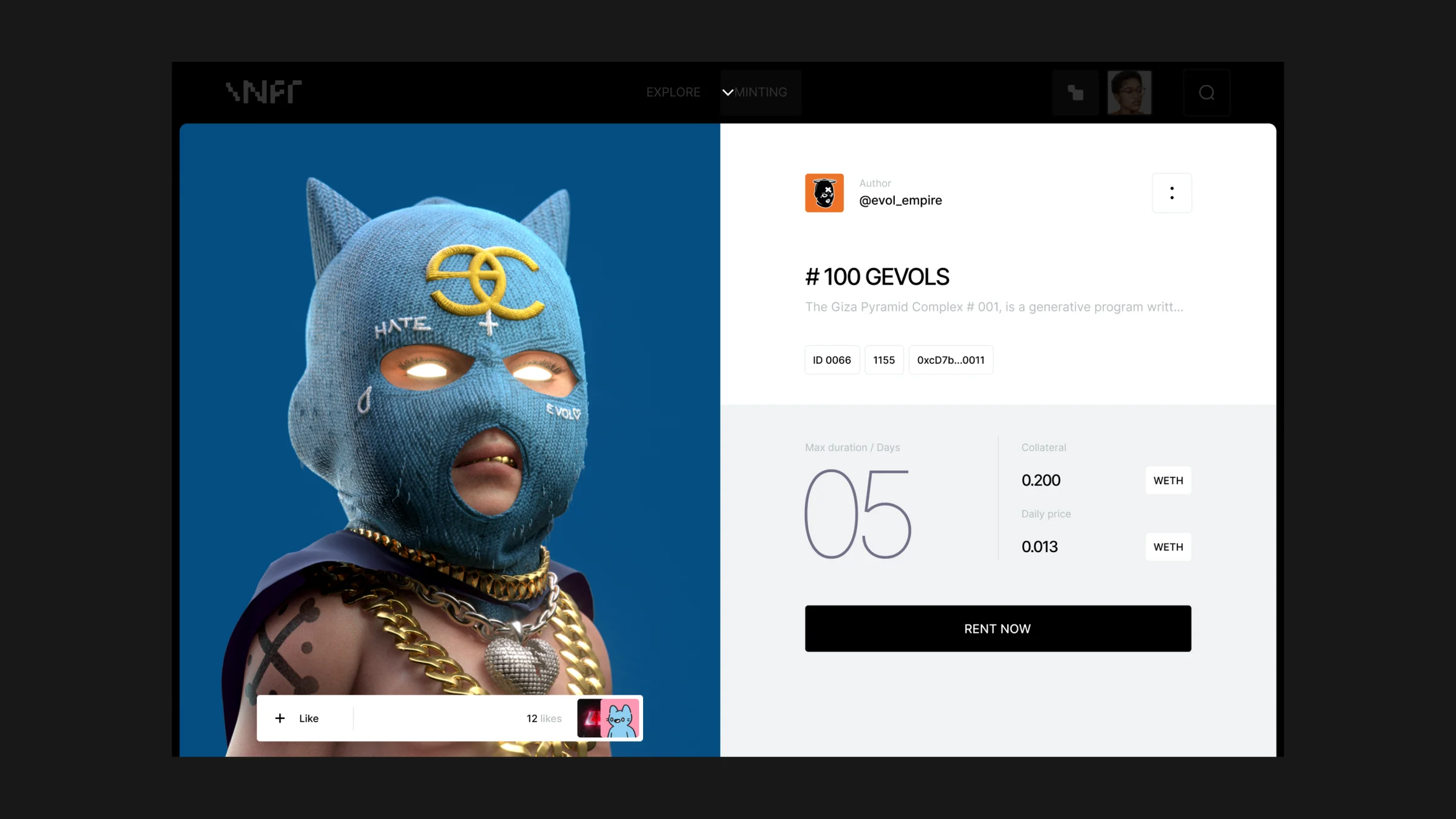
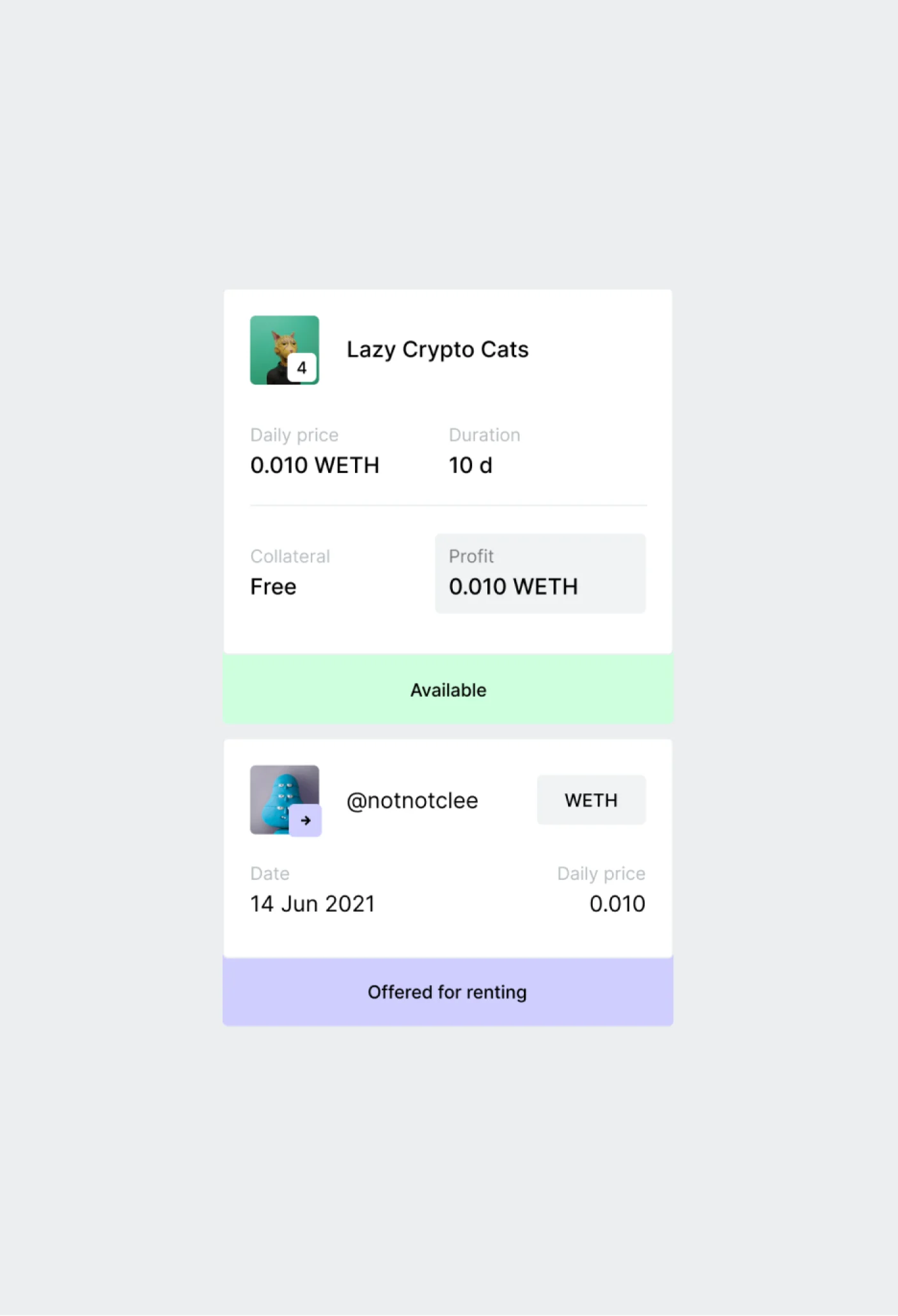
Collateral amount, rental duration, return mechanics - surfaced inline at the moment of decision, not buried in advanced settings.
Status as a first-class concept
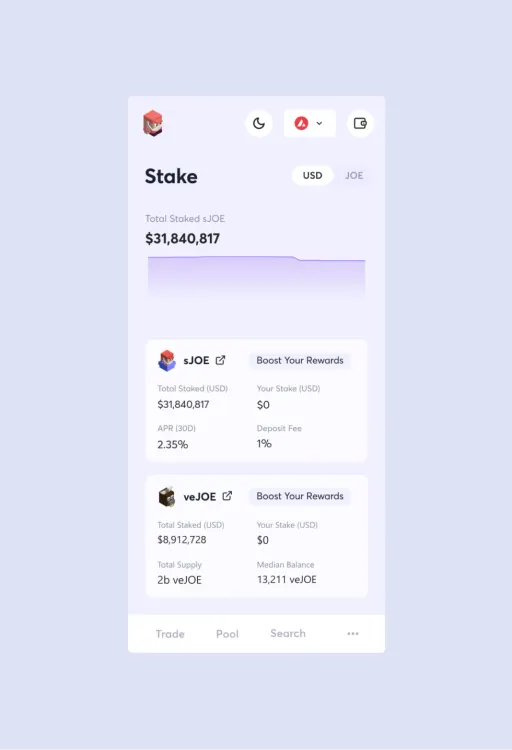
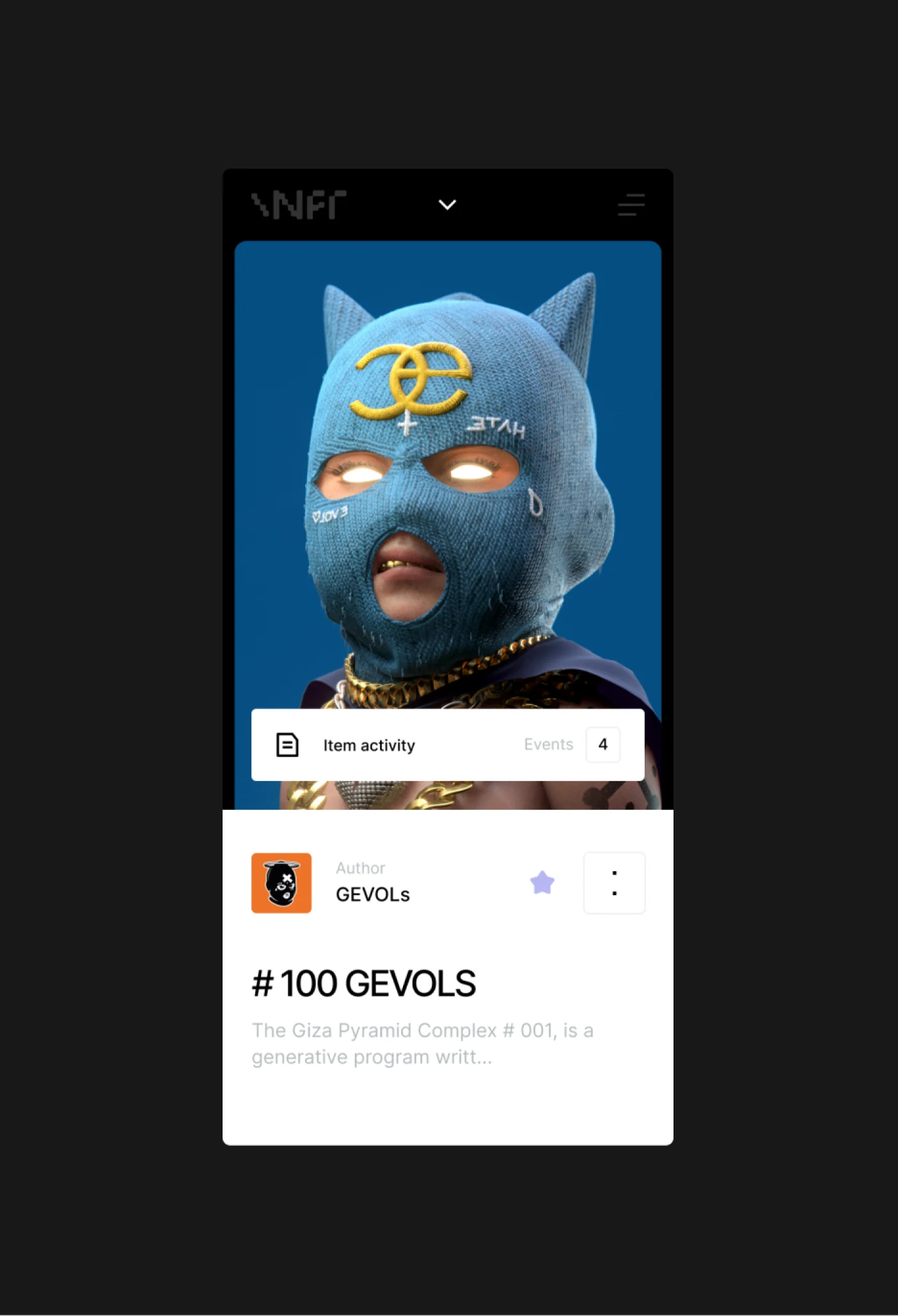
Active / expired / returned / disputed - a single state model that drives every list, card, and detail screen across the product.
One brand for partners and end users
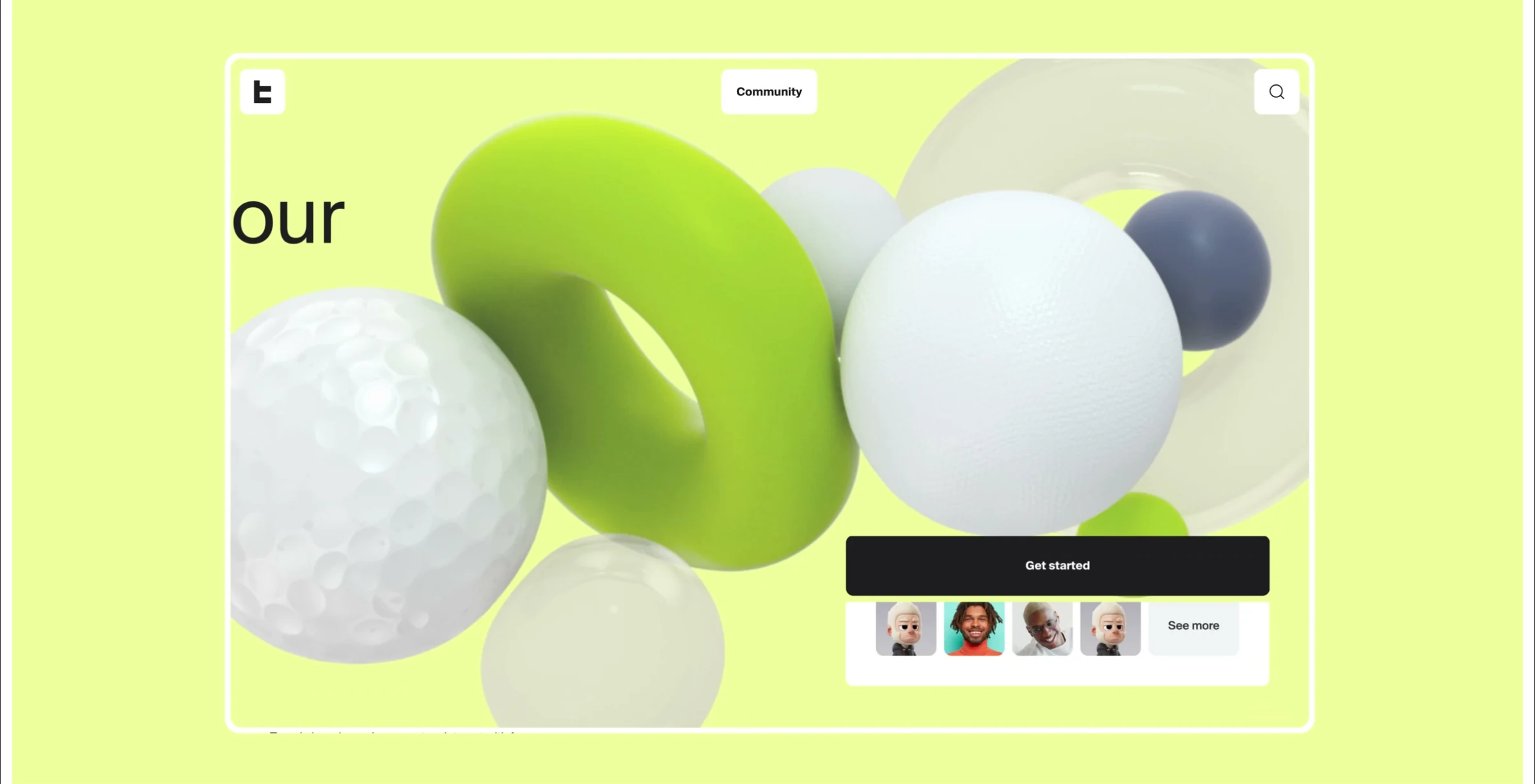
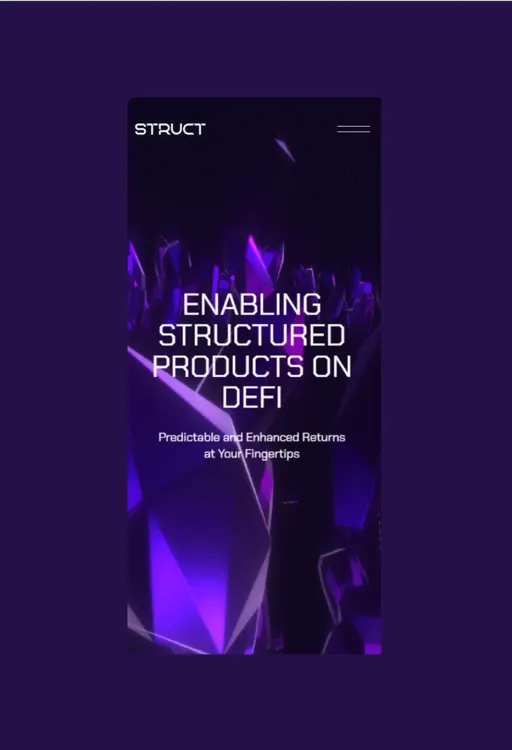
reNFT is invisible infra in some integrations and a direct product in others. The brand and component system flex across both without breaking.
Token-driven design system
Set the token + primitive layer the team kept shipping on after I left - V2, additional chains, and integration UIs were built on these foundations.
What shipped
Lender flows
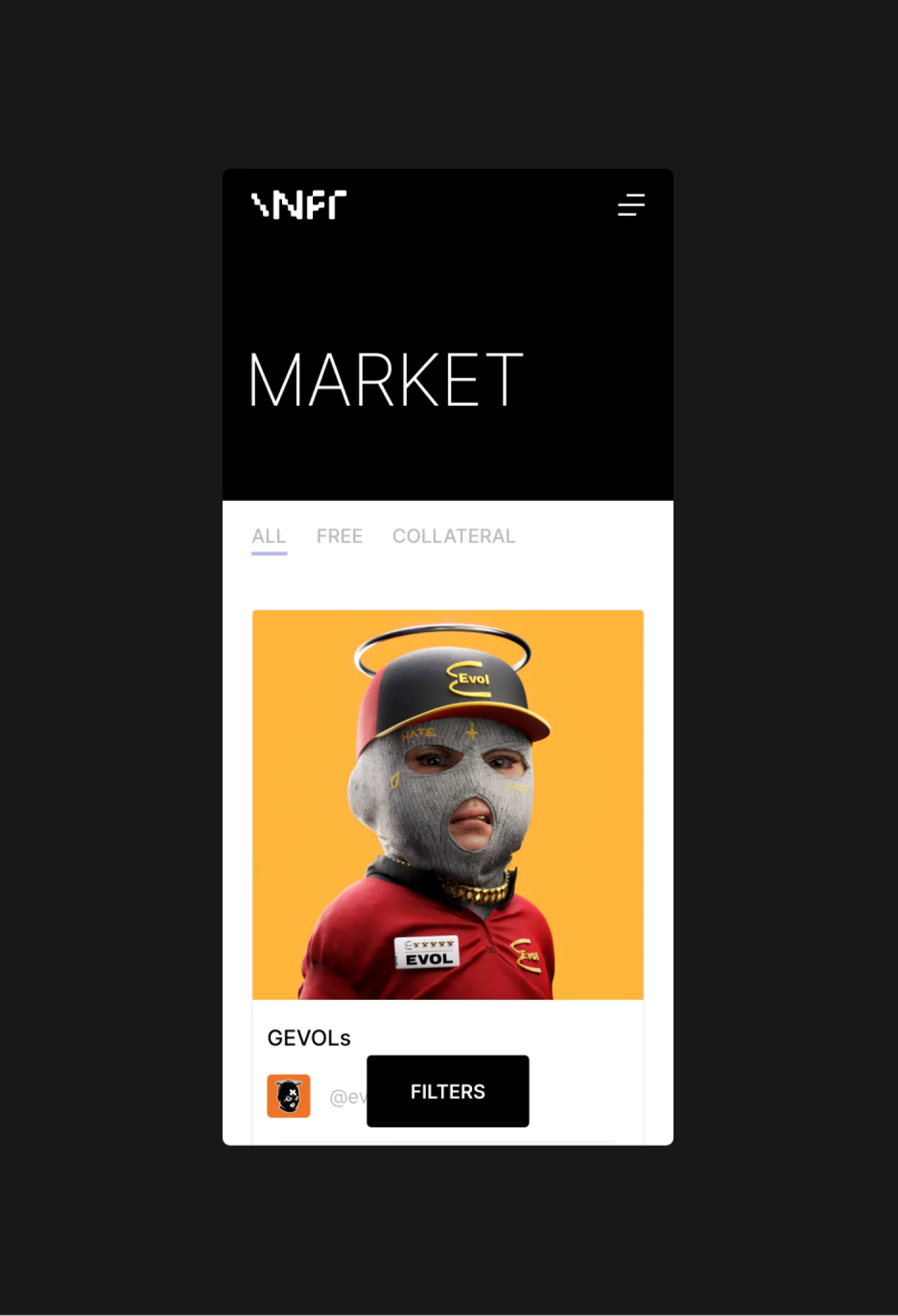
List an NFT for rent, set terms, choose collateral mode - designed so the lender stays in their role without bleeding into renter UI.
Renter flows
Browse, rent, manage active rentals, return - surfaced collateral, duration, and return mechanics inline at the moment of decision.
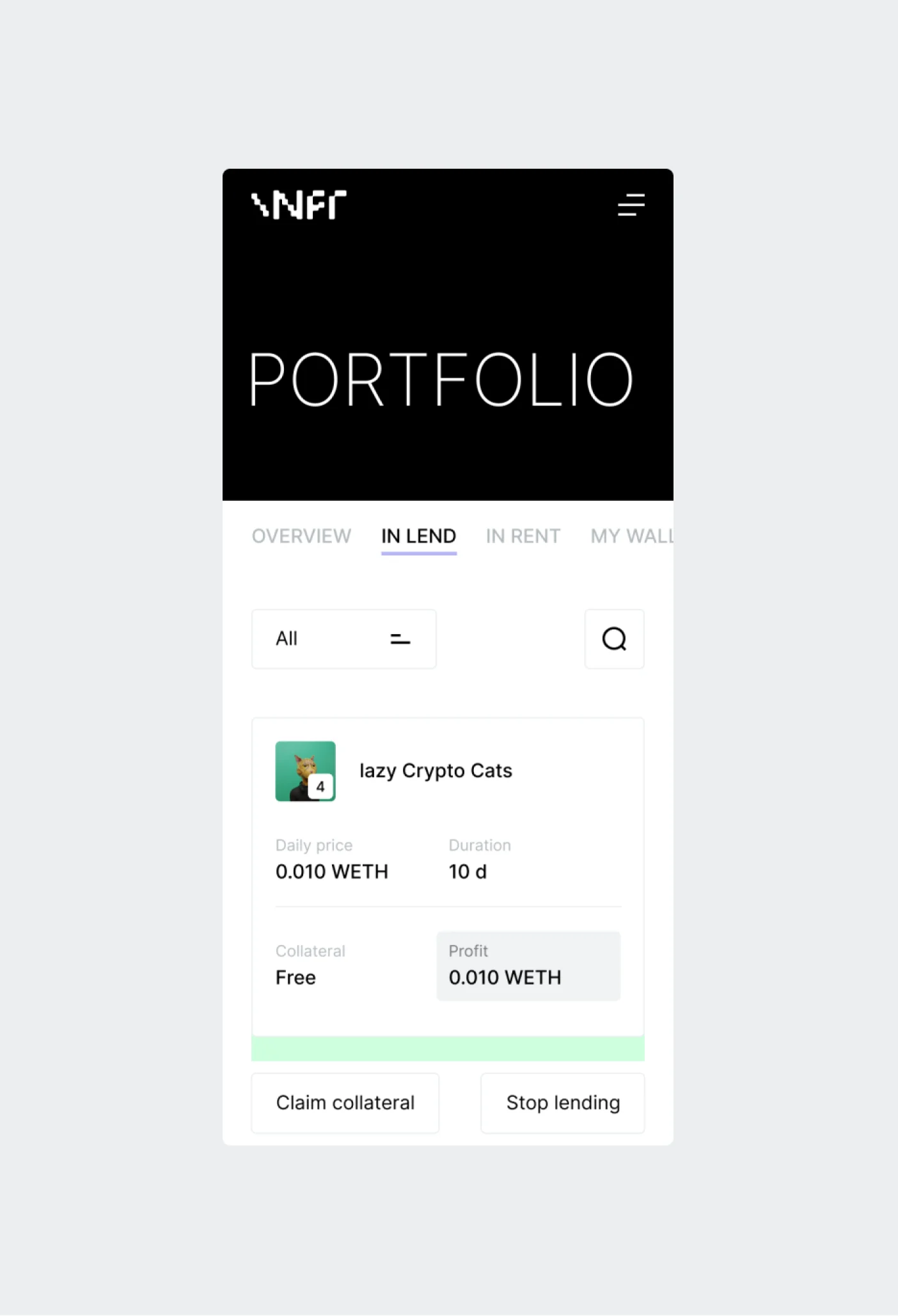
Lender / renter dashboards
Two distinct dashboards keyed by role, with status (active, expired, returned, disputed) as a first-class concept.
Brand and design system
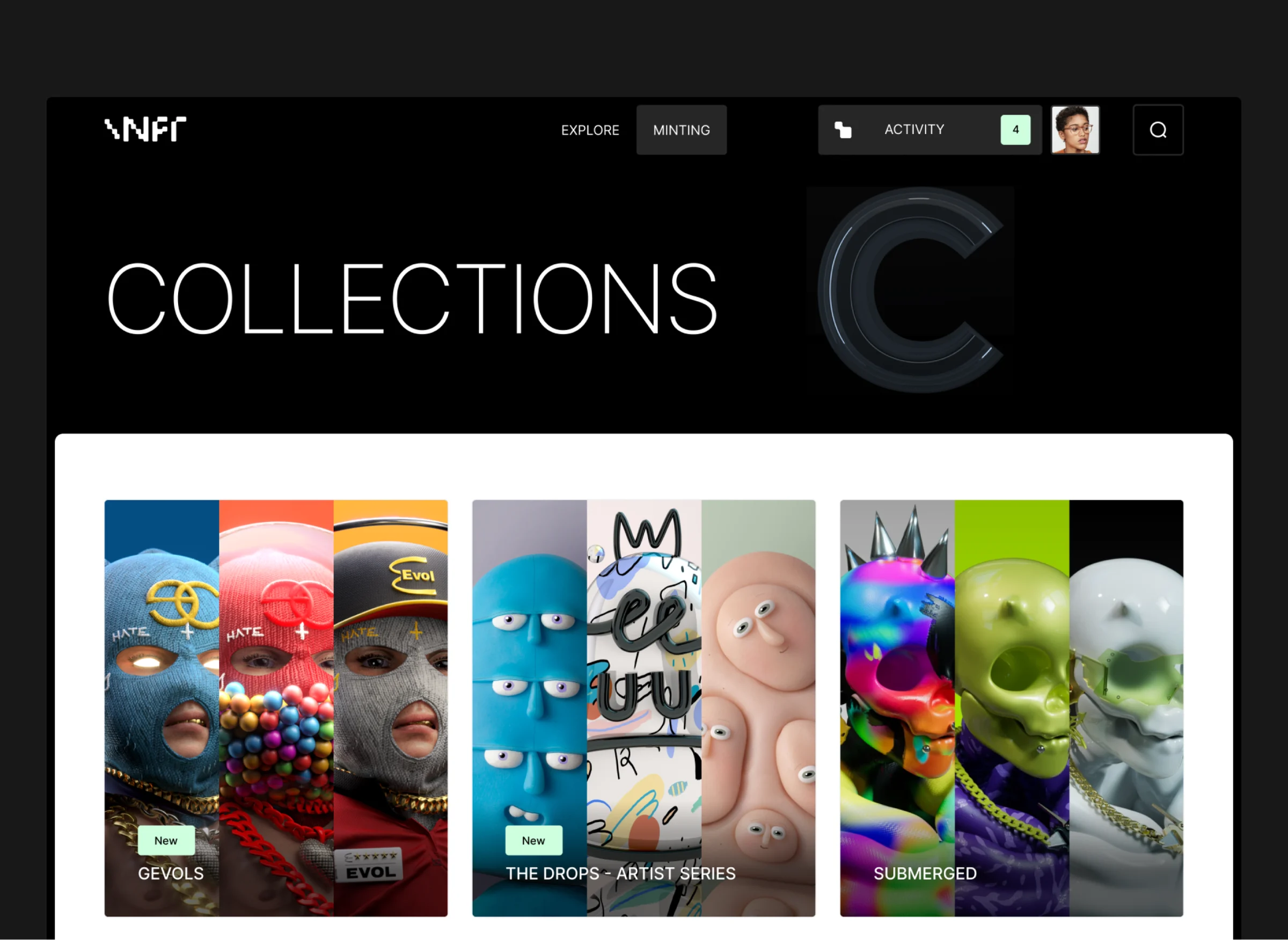
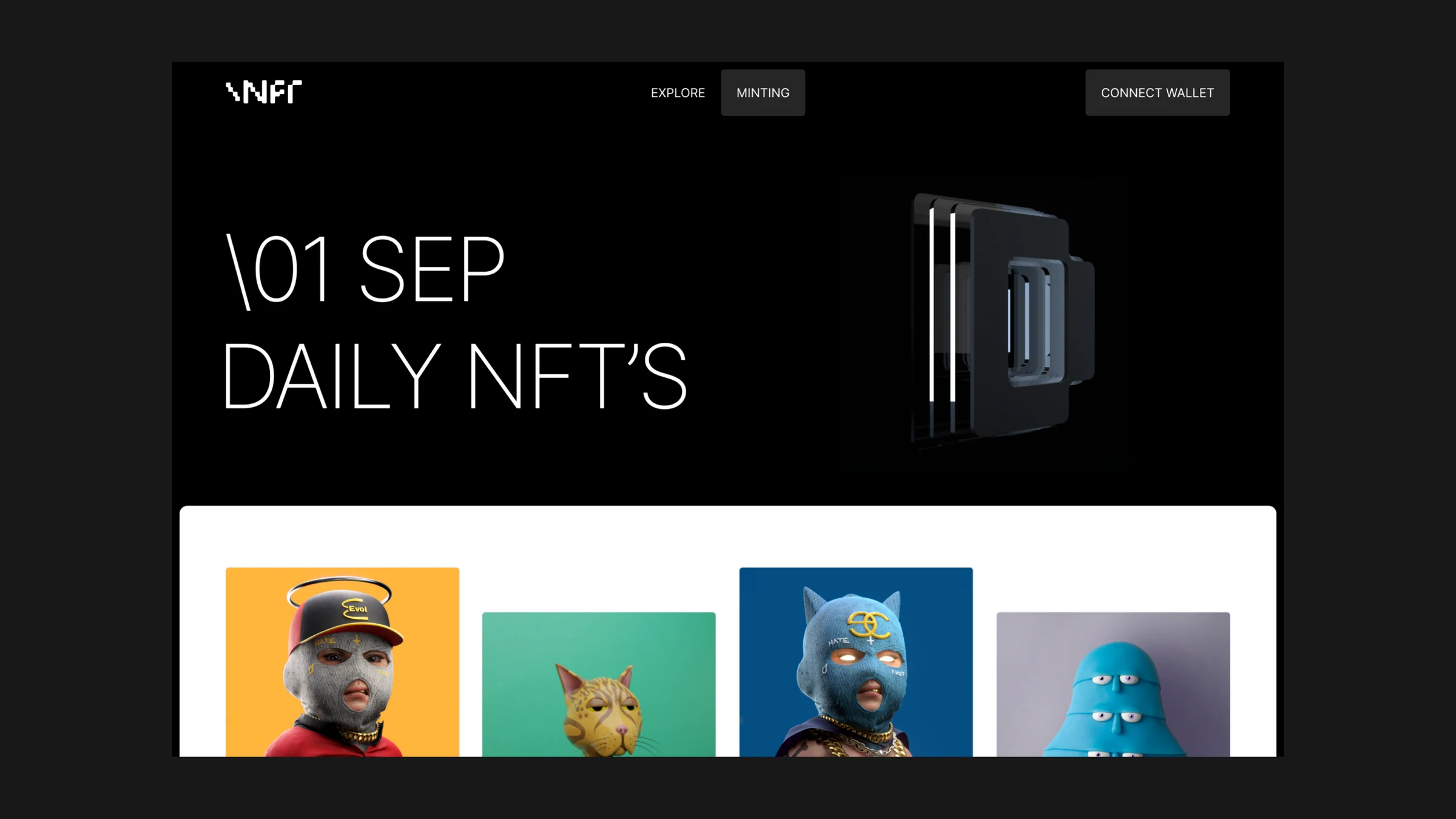
One visual language that holds across direct product, partner integrations, and marketing - built on a token + primitive layer the team kept shipping on after I left.
Outcomes
Takeaway
In dual-sided protocols, the hardest design problem isn't the visual surface - it's deciding when one user is acting as which role. Splitting lender and renter into separate mental models, even for the same wallet, was the call that made everything else readable.